
Table of Contents
- What a Psychiatric Mental Health Nurse Practitioner Does
- PMHNP Scope of Practice California: What the Law Allows
- How to Become a Psychiatric Mental Health Nurse Practitioner in California
- PMHNP Programs: Curriculum, Hybrid Formats, and Financial Aid
- Career Outlook and What PMHNPs Earn
- Private Pay Mental Health Care Benefits: Why It Matters
- Conclusion
Last Updated: September 8, 2026
Becoming a psychiatric mental health nurse practitioner (PMHNP) is one of the most clinically demanding and personally meaningful paths in nursing. This guide from Harmony Mindful Breakthrough Specialists covers training, licensure, scope of practice, and career realities, with particular attention to how these clinicians practice in California, where the regulatory landscape and demand for behavioral health services shape the role in specific ways.
A psychiatric mental health nurse practitioner is an advanced practice registered nurse (APRN) who specializes in mental health evaluation, diagnosis, psychotherapy, and medication management. PMHNPs bring nursing’s whole-person orientation together with prescriptive authority and the clinical depth to manage complex presentations over time.
The shortage of psychiatric providers across the country makes this specialty especially consequential. According to the Health Resources and Services Administration workforce projections, behavioral health workforce shortages are projected to persist well into this decade, with rural and underserved communities facing the most acute gaps. California is no exception.
What a Psychiatric Mental Health Nurse Practitioner Does
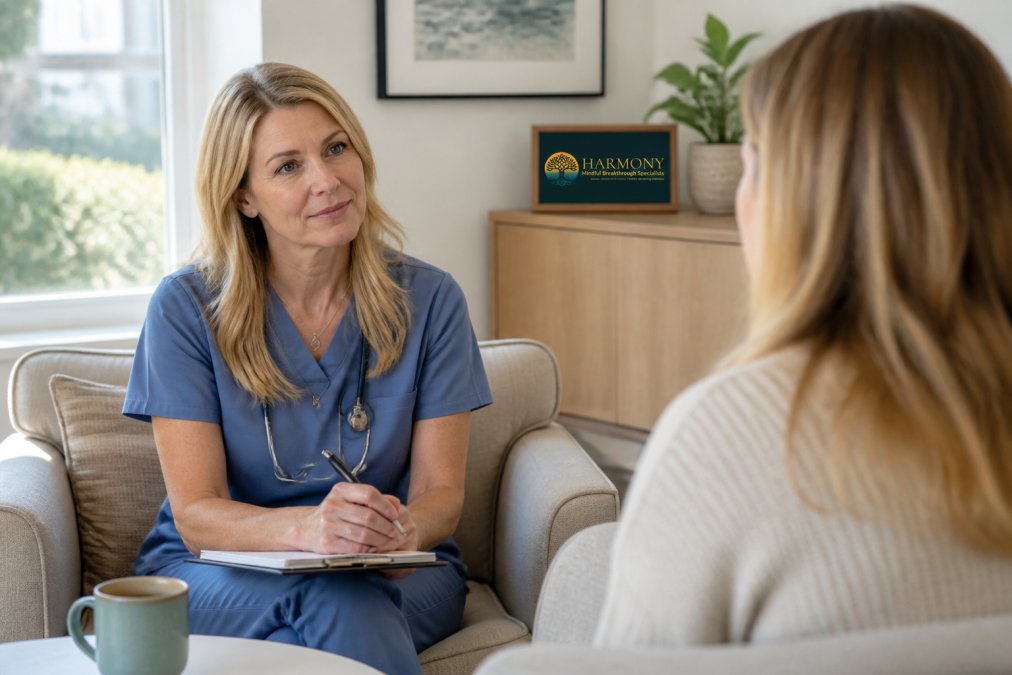
A psychiatric mental health nurse practitioner evaluates, diagnoses, and treats mental health conditions across the lifespan. The role integrates clinical assessment, psychotherapy, and pharmacological management, often within a single ongoing relationship with a patient.

PMHNPs conduct comprehensive psychiatric evaluations, provide evidence-based psychotherapy, prescribe and adjust psychiatric medications, and coordinate care with other providers. The clinical relationship typically develops over time, allowing for a more nuanced understanding of a patient’s history, patterns, and goals.
Evaluation, Diagnosis, and Psychotherapy
A psychiatric evaluation conducted by a PMHNP draws on detailed personal and medical history, current symptoms, sleep patterns, functional challenges at work or in relationships, substance use, and the broader context of a person’s life. The goal is to develop a working clinical picture that guides individualized care.
Diagnosis, when it emerges, functions as a useful framework and starting point for understanding and treatment planning, not a fixed identity. Psychotherapy is a core PMHNP competency. Depending on training and clinical context, PMHNPs may provide cognitive-behavioral therapy, supportive therapy, motivational interviewing, and other evidence-based modalities. The integration of therapy and medication management within one clinical relationship is one of the defining advantages of PMHNP care.
Medication Management and Psychopharmacology
Psychopharmacology is a foundational component of PMHNP training. PMHNPs are trained to prescribe, initiate, titrate, and discontinue psychiatric medications, including antidepressants, mood stabilizers, anxiolytics, stimulants, and antipsychotics, with attention to drug interactions, side effect profiles, and individual patient response.
Medication management happens within the context of an ongoing clinical relationship, informed by regular patient assessment and updated understanding of how a person is actually doing. This is meaningfully different from a brief prescription renewal encounter.
PMHNP Scope of Practice in California: What the Law Allows
California grants PMHNPs a broad and clearly defined scope of practice. Understanding what the law actually permits matters both for clinicians entering the field and for patients choosing a provider.
Independent Practice and the Board of Registered Nursing
In California, psychiatric mental health nurse practitioners practice under the authority of the California Board of Registered Nursing (BRN), which licenses and regulates advanced practice registered nurses. California law provides pathways for qualified nurse practitioners to practice without standardized procedures, including independent practice for NPs who meet additional education, certification, clinical experience, and other requirements.
The requirements for independent practice are detailed and vary depending on an NP’s qualifications and practice setting. Nurse practitioners considering independent practice should review the current requirements directly through the California Board of Registered Nursing’s AB 890 guidance and consult an appropriately qualified legal or professional advisor when necessary.
Telehealth Practice Laws for PMHNPs
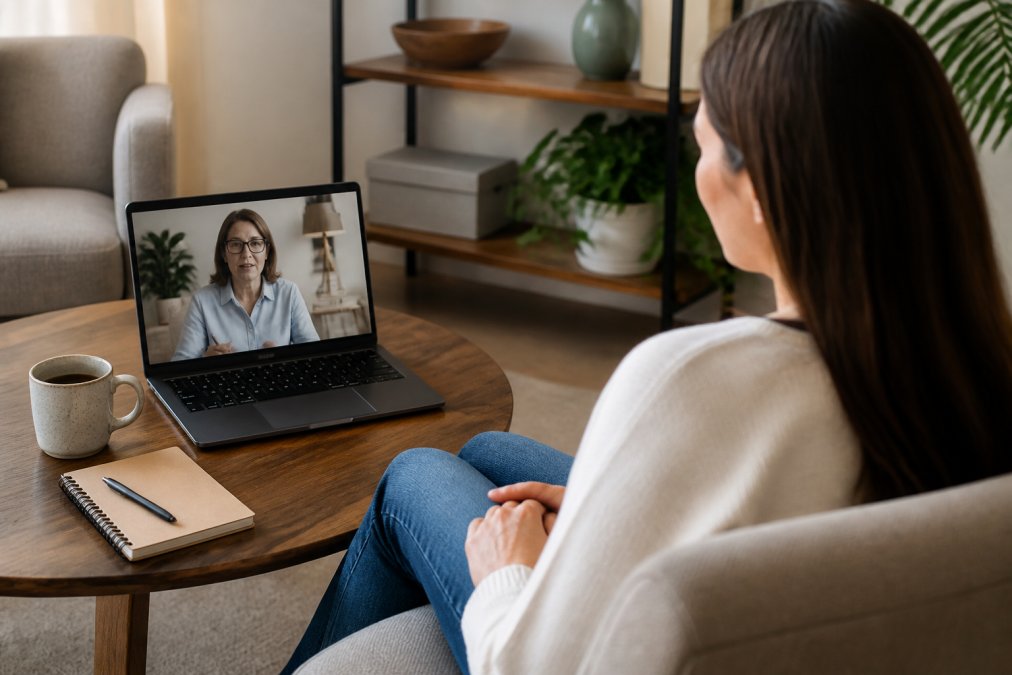
California has established a supportive regulatory framework for telehealth delivery of mental health services. PMHNPs may provide psychiatric evaluation, therapy, and medication management via synchronous video-based telehealth, subject to standard licensure and prescribing requirements.
Prescribing controlled substances via telehealth is governed by both state and federal law. The federal Ryan Haight Act has historically required an in-person evaluation before prescribing certain controlled substances via telemedicine, though federal policy in this area has evolved. Clinicians practicing via telehealth should verify current federal DEA requirements and any applicable California-specific guidance.
For patients, telehealth PMHNP care means access to board-certified psychiatric care from any location in California, a significant practical advantage for those with demanding schedules, limited geographic access, or privacy preferences.
How to Become a Psychiatric Mental Health Nurse Practitioner in California
The path to PMHNP practice in California follows a defined sequence. The total timeline from RN licensure to independent practice typically spans four to six years depending on program format and prior experience.
| Step | Requirement | Key Details |
|---|---|---|
| 1 | RN Licensure | Pass NCLEX-RN; active California RN license required |
| 2 | Graduate Degree | MSN or post-master’s certificate with PMHNP specialization |
| 3 | Clinical Hours | Supervised practicum hours; program-specific minimums apply |
| 4 | Certification | Pass ANCC PMHNP-BC exam |
| 5 | APRN Licensure | Apply to California BRN for furnishing number and APRN recognition |
Step 1: Earn an RN License and Meet Admission Requirements
The foundation is a current, active registered nurse license in California. Graduate PMHNP programs typically require a bachelor of science in nursing (BSN) for direct MSN entry. Some programs accept associate-degree nurses into RN-to-MSN bridge tracks. Admission requirements commonly include a minimum undergraduate GPA, letters of recommendation, a personal statement, and one to two years of RN clinical experience, though requirements vary by program.
Step 2: Complete an Accredited MSN or Post-Master’s Certificate Program
The core educational requirement is a graduate degree or post-master’s certificate from a program accredited by either the Commission on Collegiate Nursing Education (CCNE) or the Accreditation Commission for Education in Nursing (ACEN). Accreditation is required for certification eligibility and, by extension, for California APRN licensure.
The master of science in nursing with a PMHNP concentration is the most common pathway. Nurses who already hold an MSN in another specialty may pursue a post-master’s certificate in psychiatric mental health nursing. Curriculum typically includes advanced pathophysiology, advanced health assessment, psychopharmacology, psychiatric evaluation across the lifespan, evidence-based psychotherapy, and clinical practicum hours. Program length ranges from two to three years for full-time MSN students.
Step 3: Fulfill Clinical Hours and Practicum Requirements
Clinical practicum is where academic preparation meets real patient care. PMHNP programs require a defined number of supervised clinical hours. Clinical rotations expose students to diverse patient populations and settings: inpatient psychiatric units, outpatient behavioral health clinics, community mental health centers, and specialty practices.
The quality of clinical placement matters as much as the hours. Students should seek programs with established clinical site relationships and preceptors who are active, board-certified PMHNPs or psychiatrists.
Step 4: Pass Certification and Apply for APRN Licensure
Upon completing an accredited program, graduates are eligible to sit for the PMHNP-BC examination administered by the American Nurses Credentialing Center (ANCC). After passing the certification exam, the clinician applies to the California BRN for recognition as an APRN and for a furnishing number, which authorizes prescribing.
PMHNP Programs: Curriculum, Hybrid Formats, and Financial Aid
Most PMHNP programs today offer hybrid or fully online formats, making graduate nursing education more accessible for working RNs. Hybrid programs typically deliver didactic coursework online while requiring in-person attendance for skills intensives or simulation labs. Clinical hours are completed at approved sites near the student’s location.
Before enrolling, prospective students should ask specifically how the program supports clinical site placement and whether the program arranges sites or whether students are responsible for securing their own preceptors. Curriculum depth in psychopharmacology, psychiatric evaluation, and evidence-based psychotherapy should be evaluated carefully.
Financial aid for PMHNP students may include federal student loans, institutional scholarships, and workforce development grants. The HRSA Behavioral Health Workforce Education and Training program has historically funded training programs and traineeships for behavioral health professionals, including APRNs. State-level resources, including California’s Song-Brown Healthcare Workforce Training Program, have also supported nursing education in underserved settings.
Career Outlook and What PMHNPs Earn
The demand for PMHNPs is strong and growing. Behavioral health needs have expanded significantly, and the PMHNP is one of the few provider types who can independently provide the full range of psychiatric services: evaluation, therapy, and medication management, without requiring physician oversight.
PMHNPs practice in many settings: outpatient behavioral health clinics, integrated primary care practices, inpatient psychiatric units, community mental health centers, correctional facilities, schools, and private practice. Telehealth has further expanded the geographic reach of PMHNP practice, particularly in California, where some regions have historically had limited access to psychiatric providers.
Salary varies by setting, geography, years of experience, and practice structure. The Bureau of Labor Statistics Occupational Outlook for nurse practitioners provides current national wage data for the nurse practitioner category, though PMHNP-specific figures require filtering by specialty.
Private Pay Mental Health Care Benefits: Why It Matters
Insurance-independent psychiatric care involves more than a billing arrangement; it can also shape how care is structured.

When care is not constrained by insurance authorization requirements, session limits, or diagnostic coding pressures, the clinician has more latitude to spend time where it is clinically warranted. Extended initial evaluations allow time to explore not just current symptoms but the broader context: sleep, energy, relationships, work demands, personal history, and longstanding patterns that may be contributing to what a person is experiencing.
Continuity of care is easier to maintain when the clinical relationship is not subject to insurance network changes, authorization renewals, or coverage lapses. Privacy is another concrete benefit. Because insurance-independent care does not involve submitting claims for reimbursement, information about care is not routinely submitted to an insurer for claims processing or authorization.
Whole-Person Care and the PMHNP Relationship
The most significant clinical advantage of insurance-independent PMHNP care is the capacity for whole-person assessment. At Harmony Mindful Breakthrough Specialists, this orientation is built into how care is structured. Extended, unhurried appointments create space to explore the interconnected factors that shape a person’s experience: sleep disruption, work pressures, relationship dynamics, and internal expectations that may be contributing to what someone is noticing.
HarmonyMBS integrates evaluation, psychotherapy, and medication management when appropriate within an ongoing clinical relationship. Understanding and care evolve together over time, rather than being separated into distinct services that never quite connect. Mina Heydari, PMHNP-BC, brings over 25 years of mental health experience, including inpatient psychiatric units and urban community settings, to this work, in clinical collaboration with Christopher Levy, M.D., a board-certified psychiatrist.
The result is a clinical relationship where a person can explore what they are experiencing, consider options, and participate actively in the direction of their care, without being defined by a diagnosis or directed toward a predetermined outcome.
Many adults find that by the time they seek psychiatric care, they have already been carrying something for a long time. The question is not always whether something is wrong, but what it is, what it means, and what might help. HarmonyMBS offers extended, individualized psychiatric evaluation and care via secure telehealth across California, with attention to the full picture of a person’s life rather than a narrow set of symptoms. If you are ready to explore what a comprehensive, unhurried evaluation might offer, schedule an initial consultation with HarmonyMBS to take the next step at your own pace.
Frequently Asked Questions
What is the scope of practice for a PMHNP in California?
In California, a psychiatric mental health nurse practitioner (PMHNP) is licensed as an advanced practice registered nurse (APRN) through the Board of Registered Nursing. PMHNPs independently evaluate and diagnose mental health conditions, provide psychotherapy, and prescribe and manage psychiatric medication. They practice without a mandatory physician supervisory agreement, though many work in collaborative arrangements. Their scope covers behavioral health across the lifespan, including assessment, treatment planning, and ongoing medication management.
Do I need a formal diagnosis before seeing a PMHNP?
No. A psychiatric mental health nurse practitioner begins with a thorough evaluation of what you are experiencing — your sleep, mood, focus, energy, history, and the pressures shaping your daily life. A diagnosis may emerge from that process as a useful framework for understanding your experiences and guiding care. It is not a prerequisite for scheduling an appointment. Many people come in uncertain about what is going on and leave with greater clarity, whether or not a formal label is part of that picture.
How does telehealth psychiatric care work for adults in California?
California law permits licensed PMHNPs to provide evaluation, psychotherapy, and medication management through secure telehealth platforms, as long as the clinician holds an active California APRN license and the patient is physically located in the state at the time of the appointment. Sessions typically take place via encrypted video. For adults with demanding schedules or privacy concerns, telehealth removes geographic barriers and allows care to continue consistently without requiring in-person visits.
What are the benefits of choosing a private-pay PMHNP over an insurance-based provider?
Private pay mental health care gives clinicians more flexibility to spend extended time with patients, schedule appointments without insurance-driven restrictions, and document care in ways that protect patient privacy. Diagnoses are not required solely to satisfy billing codes. Appointments tend to be longer and less rushed, which allows for more thorough evaluation and a stronger therapeutic relationship over time. Patients retain more control over the direction of their care rather than having coverage requirements shape clinical decisions.
How much do PMHNPs earn in California?
Earnings for psychiatric mental health nurse practitioners vary by setting, years of experience, and whether the clinician works in a hospital, community behavioral health organization, or private practice. California generally offers higher compensation than the national average for PMHNPs, reflecting both the state’s cost of living and the significant demand for psychiatric mental health services. For current salary figures, the Bureau of Labor Statistics and professional nursing associations publish regularly updated data by state and specialty.
What financial aid options exist for PMHNP graduate programs?
Students pursuing a Master of Science in Nursing or post-master’s certificate in psychiatric mental health nursing may qualify for federal student loans, HRSA nursing workforce grants, and state-funded loan repayment programs tied to service in underserved areas. Some employers, particularly federally qualified health centers and VA facilities, offer tuition assistance or loan forgiveness in exchange for a service commitment. Each program’s financial aid office can clarify which options apply to PMHNP-specific graduate study.