


Table of Contents
- What You’ll Need Before You Start
- Step 1: Self-Help Strategies for Anxiety You Can Start Today
- Step 2: Find Sliding Scale Therapy and Low-Cost Clinics
- Step 3: Use Telehealth Psychiatry Without Insurance
- Step 4: Understand Your Legal Rights and Insurance Navigation
- Step 5: Recognize When to Manage Anxiety Without Insurance Isn’t Enough
- Common Mistakes to Avoid When Managing Anxiety Without Insurance
- Conclusion
Last Updated: August 20, 2026
What You’ll Need Before You Start
There are practical ways to manage anxiety without insurance while also finding mental health care that fits your needs and circumstances. Before you spend money or begin contacting providers, it can help to assess what you’re working with.
In this article, we’ll walk through a structured, step-by-step approach to help you manage anxiety without insurance, from self-help strategies you can use now to exploring options for professional care.
Before you begin, gather these basics:
- A notebook or app to track symptoms, sleep patterns, mood shifts, and triggers
- A rough sense of your monthly budget for mental health care (even $0 is a starting point)
- Your state of residence, as community mental health resources vary significantly
- Any prior diagnoses, medications, or treatment history you can recall
One honest caveat: the strategies below address symptom management and access to care. They are general information, not a substitute for a clinical diagnosis or individualized treatment. If you are in immediate danger or considering harming yourself or someone else, call 911 or go to the nearest emergency room. If you are experiencing a mental health crisis that is not an immediate emergency, contact the 988 Suicide and Crisis Lifeline by calling or texting 988 immediately.
Step 1: Self-Help Strategies for Anxiety You Can Start Today
Self-help strategies are most useful when they are realistic enough to practice consistently. The approaches below cost little or nothing and may help you manage some symptoms of anxiety day to day. The goal is not necessarily to eliminate anxiety, but to give you practical ways to respond to it while you consider whether additional support or professional care may be helpful.

Mindfulness practices can help redirect attention to the present moment during periods of heightened anxiety.
Mindfulness and Relaxation Techniques
Mindfulness is the practice of directing attention to the present moment without judgment. For anxiety, this can be helpful because anxious thinking often focuses on what might happen next. Mindfulness can help redirect attention to the present moment.
Practical starting points:
- Diaphragmatic breathing: Try breathing slowly and comfortably, allowing your exhale to last a little longer than your inhale. One approach is to inhale for 4 counts, pause for 2, and exhale for 6. Slow, controlled breathing, particularly with a longer exhale, may help reduce feelings of physiological arousal during periods of stress or anxiety.
- Body scan meditation: Lie flat and move attention slowly from your feet to your head, noticing tension without trying to fix it.
- Grounding techniques: The 5-4-3-2-1 method (name 5 things you see, 4 you can touch, 3 you hear, 2 you smell, 1 you taste) is one technique some people use to redirect attention to the present moment during periods of heightened anxiety.
The American Psychological Association offers additional guidance on managing stress, including relaxation, mindfulness, physical activity, and healthy sleep habits. Apps like Insight Timer offer free guided meditations.
Aerobic Exercise and Sleep Hygiene
Regular physical activity has been associated with benefits for anxiety, stress, sleep, and overall well-being. A brisk 30-minute walk, cycling, or another form of aerobic activity can be a practical place to start, depending on your health, abilities, and preferences. Rather than focusing on a particular type of exercise, look for activities you can realistically make part of your routine. Current physical activity guidelines from the U.S. Department of Health and Human Services recommend at least 150 minutes of moderate-intensity aerobic activity per week for adults, though individual needs and abilities vary.
Sleep and anxiety can influence one another. Anxiety may make it harder to fall asleep or stay asleep, while insufficient or disrupted sleep can make anxiety more difficult to manage. Helpful sleep habits may include maintaining a consistent sleep and wake schedule, creating a cool and dark sleep environment, and limiting screens before bed. You may also want to avoid caffeine after 2 p.m. for a period of time and notice whether that makes a difference in your sleep or anxiety. If anxiety regularly wakes you during the night or sleep problems persist, consider documenting the pattern and discussing it with a healthcare professional.
Aromatherapy and Sensory Regulation
Some people find sensory strategies helpful for creating a calmer environment or managing feelings of overstimulation or heightened anxiety. These might include calming scents such as lavender, using a weighted blanket, reducing noise or other sensory input, or using noise-canceling headphones. Brief exposure to cold water on the face, sometimes referred to as cold-water face immersion, is another technique some people use during periods of acute anxiety. This might involve splashing the face with cold water or briefly applying cold water to the face. Individual responses vary, so pay attention to what feels helpful and comfortable for you. These approaches are best viewed as self-regulation strategies rather than substitutes for treatment when anxiety is persistent or significantly affecting daily life.
Step 2: Explore Your Options for Care Without Insurance
Not using insurance can mean different things. You may not currently have health insurance, or you may have coverage but prefer to pay directly for mental health care. Your options will depend in part on which situation applies to you.
If cost is a significant concern, community mental health organizations, federally qualified health centers, university training clinics, and some private clinicians may offer reduced-fee or sliding-scale services. Availability and eligibility vary by location. SAMHSA’s Behavioral Health Treatment Services Locator can help you identify services in your area.
If you have the ability to pay directly for care, insurance-independent practices offer another option. Rather than choosing from an insurance network, you can evaluate clinicians based on their qualifications, approach, availability, and fit.
Step 3: Use Telehealth Psychiatry Without Insurance
Telehealth psychiatry without insurance can include receiving care from a licensed psychiatrist or psychiatric mental health nurse practitioner through video appointments and paying directly rather than billing an insurer. This can allow care to proceed without insurance coverage requirements shaping which services will be reimbursed.
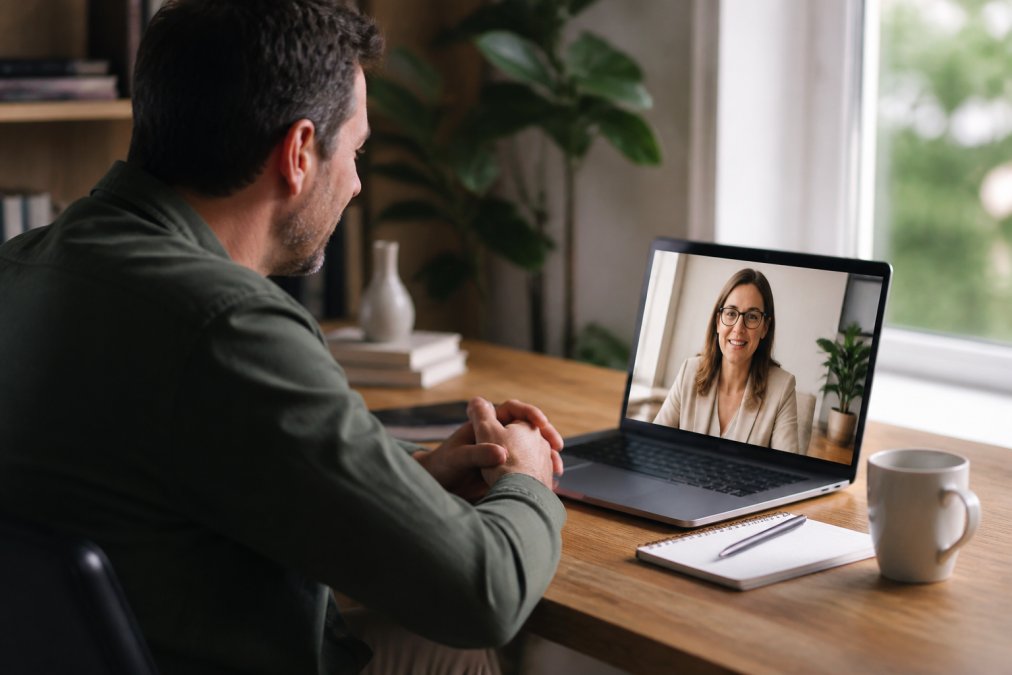
Telehealth can provide another way to access mental health care without using insurance.
At HarmonyMBS, care is insurance-independent and provided through telehealth to adults across California. Our approach emphasizes thoughtful evaluation, collaborative care, and time to consider symptoms within the broader context of a person’s life.
How to Evaluate a Telehealth Mental Health Provider
When considering telehealth mental health care, a few practical details can help you evaluate how a provider approaches remote care. Professional guidance from the American Psychiatric Association highlights considerations such as:
- Protecting privacy during video appointments
- Having a plan if the video connection is interrupted
- Knowing the patient’s location and how to respond if urgent help is needed
- Making sure telehealth is appropriate for your individual needs and the type of care you may require
- Making sure patients understand how telehealth care will work
The American Psychiatric Association provides additional detail in its Best Practices in Synchronous Videoconferencing-Based Telemental Health.
Step 4: Understand Paying Directly and Out-of-Network Benefits
Choosing insurance-independent care does not necessarily mean your health insurance has no role at all. If you have insurance, your plan may include out-of-network mental health benefits that reimburse you for a portion of eligible services after you pay the provider directly.
Before beginning care, you can contact your insurer and ask whether your plan includes out-of-network benefits for mental health or psychiatric services, whether you must meet an out-of-network deductible, what percentage of eligible charges may be reimbursed, and what documentation you will need to submit a claim. Coverage and reimbursement vary by plan, so your insurer is the appropriate source for information about your specific benefits. HarmonyMBS can provide a superbill that you may submit to your insurance company for possible out-of-network reimbursement. A superbill includes the information your insurer needs to process the claim, such as diagnosis and service details. If you prefer not to share information about your mental health care with your insurance company, you may choose not to submit a superbill for reimbursement.
If you choose insurance-independent care, consider the cost of care based on what you can comfortably pay rather than assuming reimbursement will be available. Any out-of-network reimbursement you later receive can then reduce your net cost.
Common Mistakes to Avoid When Managing Anxiety Without Insurance
Treating self-help as a substitute for professional care when more support is needed. Mindfulness, exercise, relaxation practices, and other self-help strategies may help with some symptoms, but they do not replace individualized evaluation or treatment when anxiety is persistent or significantly affecting daily life.
Assuming that not using insurance means professional care is not an option. You can explore direct-pay and insurance-independent providers without limiting your search to an insurance network. If cost is a concern, reduced-fee and community-based resources may also be available.
Choosing telehealth based on convenience alone. Telehealth can make mental health care easier to fit into daily life, but it also needs to be appropriate for your individual needs and the type of care you may require.
Assuming out-of-network reimbursement is guaranteed. If you have insurance, ask your insurer about out-of-network mental health benefits, deductibles, reimbursement rates, and claim requirements before assuming that part of your costs will be reimbursed.
Waiting for a crisis to seek care. If anxiety is becoming harder to manage or increasingly interfering with sleep, work, relationships, or daily life, consider seeking professional support before the situation becomes more severe.
Finding the Right Path Forward
Navigating anxiety without using insurance can feel complicated, whether you are uninsured or have chosen not to involve insurance in your mental health care. HarmonyMBS offers insurance-independent telehealth psychiatric care for adults across California, with extended sessions and a whole-person approach that considers mood, energy, focus, sleep, and the broader context of your life. Without insurance coverage requirements shaping the structure of care, there is more time to explore what you are experiencing and consider what may be helpful. Care begins with an initial consultation, where you can share what has been happening, ask questions, and determine whether HarmonyMBS may be an appropriate fit for your needs.
Frequently Asked Questions
What are the most effective evidence-based ways to manage anxiety at home?
Strategies such as regular physical activity, mindfulness, relaxation techniques, consistent sleep habits, and tracking anxiety triggers may help some people manage symptoms. Slow breathing and progressive muscle relaxation may also be helpful during periods of heightened anxiety. Self-help strategies are best viewed as tools for managing symptoms rather than substitutes for professional evaluation or treatment when anxiety is persistent, severe, or interfering with daily life.
Can I get mental health care without using insurance?
Yes. Some mental health professionals and practices accept direct payment without billing insurance. This may allow you to choose a clinician based on qualifications, approach, availability, and fit rather than limiting your search to an insurance network. If you have insurance with out-of-network benefits, you may also be eligible for partial reimbursement, depending on your plan.
How do I know when to seek professional help for anxiety?
Consider professional help when anxiety is persistent, worsening, or significantly interfering with sleep, concentration, relationships, work, or everyday activities. New or concerning physical symptoms should also be medically evaluated rather than automatically attributed to anxiety. A qualified healthcare professional can help assess what may be contributing to your symptoms and discuss appropriate treatment or support options.
What are the benefits of private, insurance-independent psychiatric care?
Insurance-independent care allows you to choose a clinician without limiting your search to an insurance network and receive care without relying on insurance reimbursement or prior authorization. Depending on the practice, it may also provide greater flexibility in appointment structure and follow-up. If your insurance includes out-of-network benefits, you may be able to submit a superbill for possible reimbursement. Keep in mind that doing so requires sharing clinical information with your insurer, including diagnosis and service information.
Is telehealth appropriate for everyone with anxiety?
Not necessarily. Telehealth can be a convenient way to receive mental health care, but whether it is appropriate depends on your individual needs, symptoms, circumstances, and the type or level of care you may require. A clinician can help determine whether telehealth is an appropriate setting for your care or whether another setting or level of support would better meet your needs.